Nina de Paula
Short answer up front: if your skin keeps breaking out after you've already fixed your diet, your pillowcases, and your entire skincare shelf, the one thing most people in Malaysia never test is the water hitting their face twice a day. It isn't a magic cause and it won't be the answer for everyone. But it's cheap to check, and for me it was the thing I'd completely missed.
Here's my story, and the actual facts about what comes out of the tap here, so you can decide for yourself.
I tried everything else first
For about a year my skin broke out no matter what I did. I bought the creams people swore by. I layered serums. I did the clay masks. I cut dairy, cut sugar, drank more water, changed my sheets weekly. Every few weeks I'd think something was working, then it would come right back.
What I never questioned was the water. You wash your face in it, you rinse everything off in it, and you assume it's clean because it's "treated." That assumption is where I got stuck.
What is actually in Malaysian tap water
This is the part nobody explains clearly, so here it is in plain terms.
Malaysian tap water is treated to a real standard. The Ministry of Health sets the Malaysian Drinking Water Quality Standard, and the National Water Services Commission (SPAN) regulates the utilities. The country operates over 500 water treatment plants, and treated water meets the Malaysian Drinking Water Quality Standard, which aligns closely with WHO guidelines, at the point of treatment. So at the plant, the water is fine.
The two things worth understanding for your skin are chlorine and the pipes.
Chlorine is added on purpose, and it has to stay in the water. At the last stage of treatment before water is distributed, operators must ensure a free chlorine residue of at least 0.2mg per litre in the treated water to kill E. coli bacteria that may exist if there is pollution in the supply system. That residual chlorine is a good thing for safety, it's what keeps the water from growing bacteria on the long trip to your house. In Malaysia, chlorine and chloramine are the primary disinfectants used, and while chlorination effectively eliminates pathogens, residual chlorine can sometimes cause an unpleasant taste and may have effects if present in larger amounts.
The pipes are the weak link, not the plant. The distribution system remains the weakest link in Malaysia's water supply chain, with non-revenue water lost through leaks, theft, and metering errors sitting at roughly 36%, one of the highest rates in Southeast Asia. Aging pipes are also where heavy metals like lead can enter water from corroded pipes between the treatment plant and your shower. Anyone who has lived through a repair notice or seen brown water after a supply disruption in KL or Selangor knows this part is real.
So the honest picture is: the water leaves the plant clean and chlorinated, then travels through a distribution network that isn't perfect, and arrives at your shower carrying chlorine plus whatever it picked up along the way.
How this connects to skin
I want to be careful here, because this is where a lot of brands overpromise and I'm not going to.
Chlorine's job is to be a disinfectant. It's effective because it strips things. On skin, the common experience people describe is dryness and tightness after a shower, the same way chlorinated pool water leaves your skin feeling stripped. When your skin barrier is dried out and stripped of its natural oils, it can overproduce oil to compensate, and for some people that shows up as more congestion and breakouts.
I'm describing my own experience and a plausible mechanism, not a medical diagnosis. Chlorine sensitivity varies person to person, and breakouts have many causes. If your skin issues are severe or persistent, a dermatologist is the right call, not a blog post. What I can tell you is that the water was the one variable I'd never controlled for, and controlling for it is simple.
What I changed
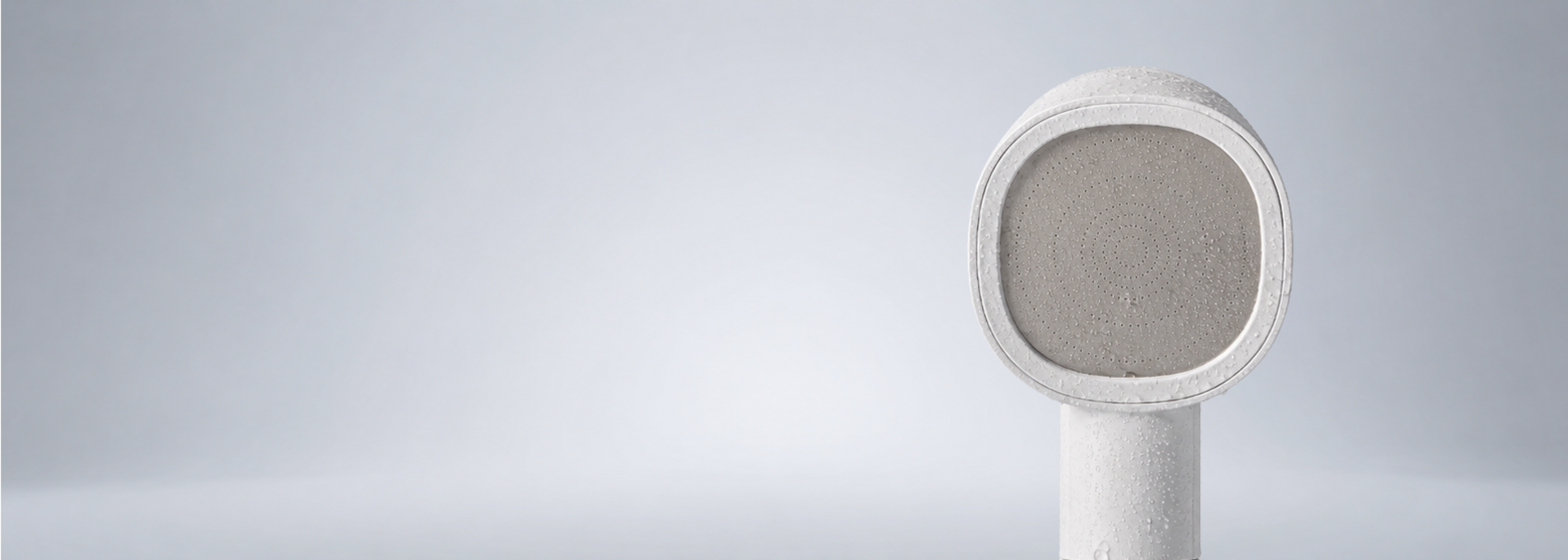
I switched to a shower head with a built-in filter, the Homi Cleanse Shower Head. It replaces your existing head and runs the water through a filter cartridge before it reaches your skin.
A few honest notes on why this one worked for my routine:
- You can see the filter. The cartridge sits inside a clear handle, so you actually watch it change colour as it does its job. After a few weeks mine had gone visibly tan. That's the sediment and buildup that would otherwise have been landing on my skin and hair.
- The box states 99% chlorine removal using a Calcium Sulfite filter. I'm quoting the package here, not making my own lab claim.
- It has practical modes (water-saving, boost) and a stainless SUS304 build, so it's a real shower head, not a gimmick you tolerate for the filter.
- A light refreshing scent in the water, which sounds minor but makes the switch feel like an upgrade rather than a chore.
Since switching, my skin stopped breaking out the way it used to and feels clearer and calmer. Your result may differ. But the logic is sound: filter the chlorine and sediment out before the water touches you, and you remove one variable you were never controlling.
Frequently asked questions
Is Malaysian tap water safe? At the treatment plant, yes. It meets the national standard aligned with WHO guidelines. The concerns for skin are the residual chlorine that's added by design and what the water can pick up traveling through an aging distribution network.
Does chlorine in shower water cause acne? Chlorine is not proven to cause acne. What it reliably does is strip and dry the skin, which can worsen congestion for some people. It's one possible contributing factor worth ruling out, not a guaranteed cause.
Do I need to filter shower water if I already filter my drinking water? Your drinking filter does nothing for the water you shower in. If you're chasing a skin issue, the shower is the exposure you've probably never addressed.
How do I know the filter is working? With the Homi Cleanse Shower Head the cartridge is visible, so you can watch it discolour over weeks of use. That's your proof it's catching sediment and buildup.
How long before I'd notice a difference in my skin? For me it was a few weeks. Skin turnover takes time, so give any change at least a full cycle before you judge it.
If you've already tried everything on your skin and nothing stuck, the water is the cheapest variable left to test. Have a look at the Homi Cleanse Shower Head. It might be the best decision you make for your skin.
This article shares personal experience and publicly available water-quality information. It is not medical advice. For persistent or severe skin concerns, see a qualified dermatologist.